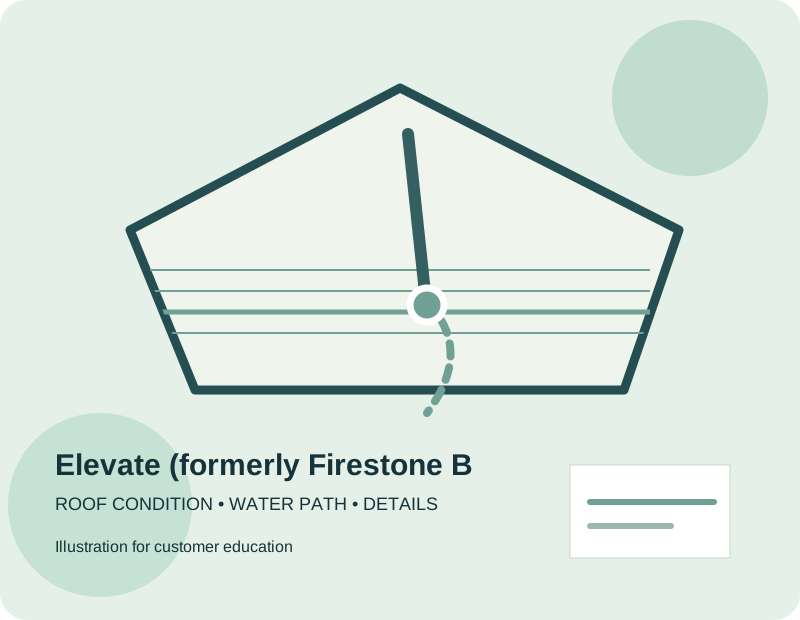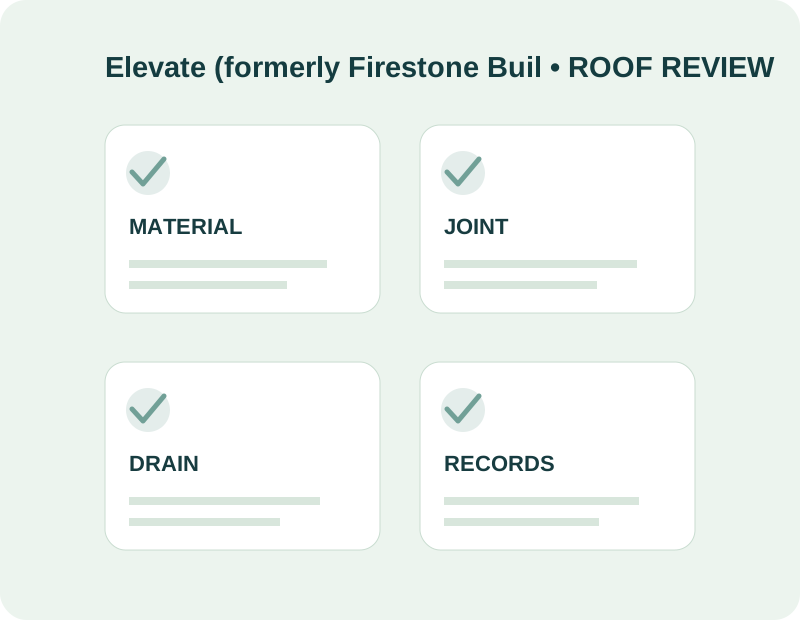
An original checklist illustration: product profile, joint, water path, and repair records.
The right repair begins with a matchOld Firestone paperwork can help solve a new leak
Names on the paperwork
A roof installed under Firestone Building Products branding may now be supported in Elevate documentation. Keep the original installer details; a brand-name change is not evidence that the existing roof has changed materials.
RubberGard versus UltraPly
Look for product records that identify EPDM or TPO before asking about repair options. A compatible seam treatment depends on the membrane actually installed, not simply the logo found on an old warranty sheet.
Document the repaired area
On an occupied low-slope building, collect room locations, ceiling photos and the roof section inspected. Ask the contractor to show the boundaries of any patch and to explain how completion will be checked.
How a Elevate (formerly Firestone Building Products) repair should be planned
A closer look at Elevate roof details
Confirm the material: Older paperwork may say Firestone Building Products while newer documents use Elevate. Match the actual EPDM or TPO system before choosing repair materials.
Trace the likely entry point: Check the seams and rooftop penetrations first, then examine drainage and edge terminations. A puddle or aged appearance alone does not prove a puncture.
Choose a compatible next step: Ask what approved joining method fits the installed membrane and how the repaired area will be checked before service is considered complete.
For a commercial or low-slope roof, start with the exact membrane family and the leak history. A patch might require a compatible heat weld, adhesive, flashing component, or other approved process. Drains, edge metal, and rooftop equipment can matter as much as the visible membrane. A building manager should keep a written leak map and repair log so each new report can be compared with the last one.
What to match: Use the original Firestone or Elevate product name to identify membrane family, seam method, and compatible accessories.
What to avoid: Assuming the renamed brand means an old membrane can be covered with any new patch material risks poor bonding.
For issues around walls or metal joints, learn about roof flashing repair. The work should fit the installed roof, not follow a one-size-fits-all patch method.