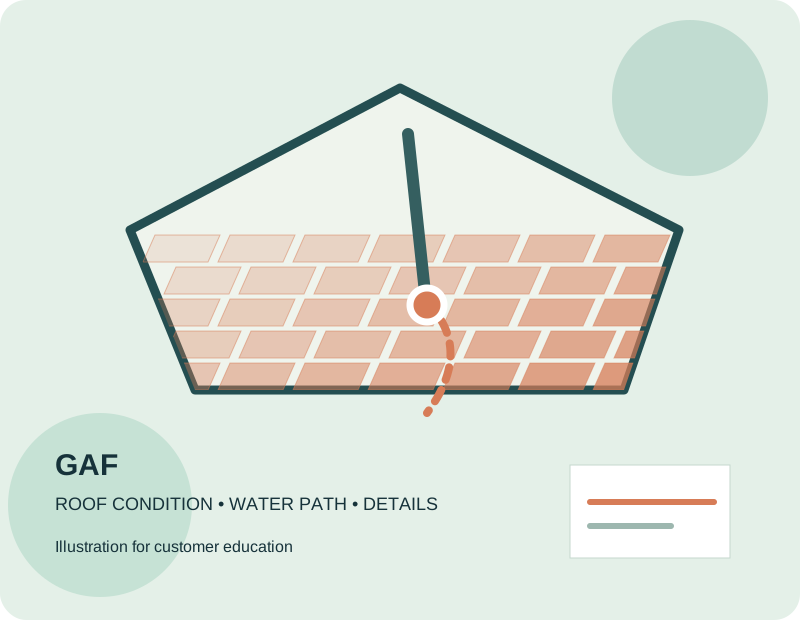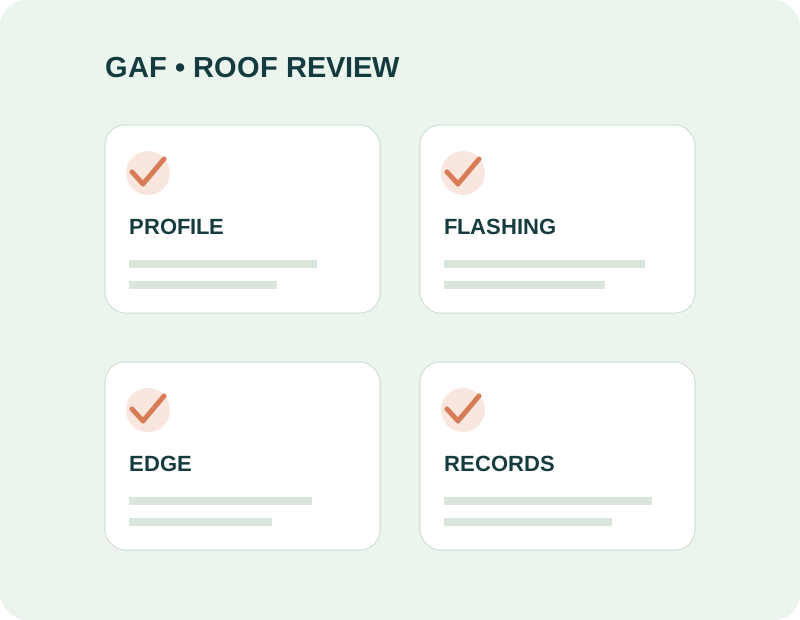
An original checklist illustration: product profile, joint, water path, and repair records.
The right repair begins with a matchHow a GAF repair should be planned
A closer look at GAF roof details
Confirm the material: Identify whether the roof uses Timberline shingles and confirm the matching ridge caps, starter course, and flashing details; do not assume every visible shingle belongs to the same system.
Trace the likely entry point: At the roof edge, check whether the starter course and drip edge send water into the gutter. Around a plumbing vent, the boot can leak even when the field shingles look sound.
Choose a compatible next step: Ask for photographs of the failed detail and the proposed replacement product. Product identity matters if warranty paperwork or a future color match is needed.
For asphalt shingles, the goal is to find the opening and keep the shingle system able to shed rain. This may involve replacing a damaged piece, renewing flashing, or fixing a pipe boot rather than covering the area with sealant. The shingle line, nearby roof condition, and accessory details will guide the correct work.
What to match: Confirm the exact Timberline line, shingle age, accessory products, and installation pattern before choosing replacement pieces.
What to avoid: A quick patch that traps moisture below good-looking shingles can hide a wet roof deck.
For issues around walls or metal joints, learn about roof flashing repair. The work should fit the installed roof, not follow a one-size-fits-all patch method.