A visible broken tile
A missing corner or cracked tile can expose the underlayment beneath.
Clay and concrete roof tiles shed water, but the layers beneath them also matter. A cracked tile can reveal a problem while the true leak travels farther down the roof.
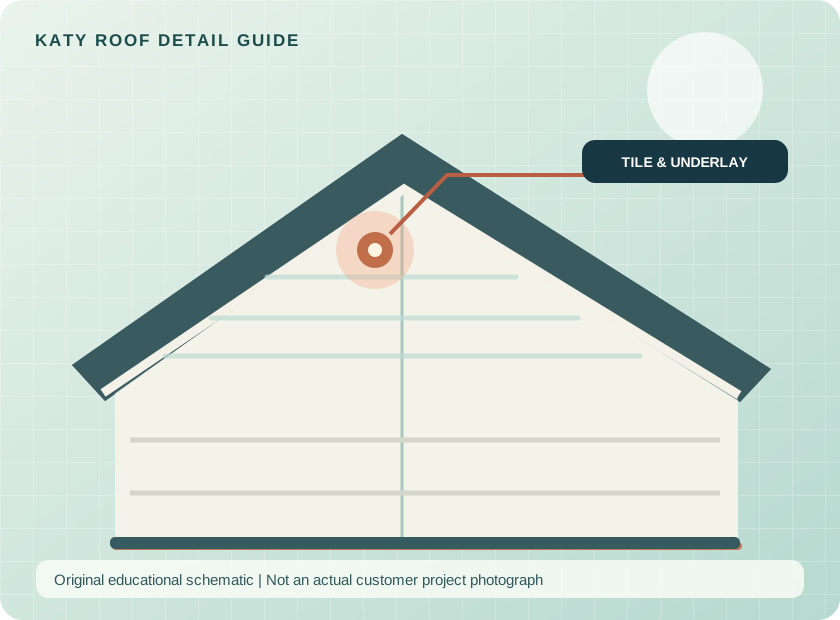
Check slipped, broken, and displaced tiles, as well as valleys, ridges, and walls on a tile-covered roof.
Tile is the outer water-shedding surface, not the whole waterproof system. The hidden layer underneath is especially important when the roof ages.
Is the problem limited to an outer tile, or has the underlayment under several tiles failed?
For a broader explanation of the roof system, visit Roof Leak Repair. This guide focuses on the smaller part that may need special attention.
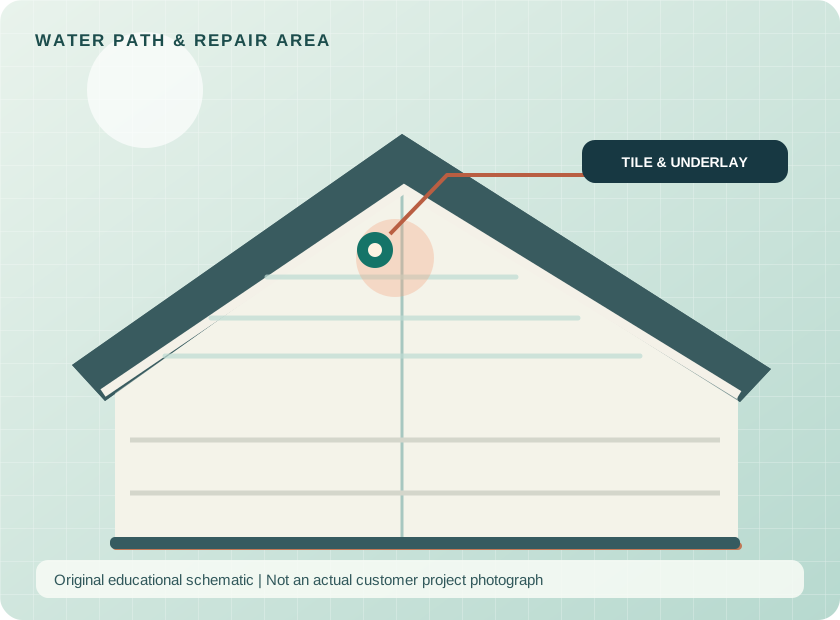
These clues help describe what happened. They do not prove a diagnosis, because roof water can travel before you see it inside.
A missing corner or cracked tile can expose the underlayment beneath.
Fastening or batten trouble may create a bigger opening.
Aging underlayment or hidden flashing may be responsible.
Water can change direction when the valley pathway is blocked.
Keep away from sagging ceilings and water near electrical fittings. Do not climb a wet or storm-damaged roof. Review emergency roof repair or ask about same-day availability; 24-hour coverage is not verified.
A helpful repair begins by ruling out nearby causes, not by treating the first spot that looks wet.
Concrete, clay, and specialty profiles need different matching and handling.
The water barrier under the visible tile surface is critical.
Water often gathers at transitions rather than on the open tile field.
Tile roofs can be brittle; inspection should be done by experienced professionals.
Tile is the outer water-shedding surface, not the whole waterproof system. The hidden layer underneath is especially important when the roof ages. Ask the contractor to explain the path water took and how the work will interrupt that path.
A final plan depends on the real roof materials, safe access, and whether hidden sections stayed dry.
A limited replacement may help if the backup layers are sound.
A leak can continue until the hidden water layer is renewed.
Tile-and-metal details may require a broader removal and reset area.
The estimate should name the affected component and explain how hidden damage, product matching, access, or a larger section would be approved before extra work begins. If the problem is not limited to this detail, start with roof leak repair.
These are questions and checkpoints to expect from a qualified roofing professional—not a claim that a visit has already been arranged.
Wind, heavy rain, and heat can test tile attachments and older membranes on suitable Katy homes. For nearby addresses in Cinco Ranch, Fulshear, Brookshire, or Cypress, confirm the actual work area and appointment availability before scheduling.
Searching for tile roof leak repair near me? When contacting a provider, share your ZIP code and ask whether they have experience with this exact roof detail.
These are general answers. Only a property-specific inspection can confirm the cause, access needs, and safe scope of work.
For more background, explore the roof leak learning center and roofing material guides.
Not always. The condition of underlayment, slope, and water route determines what happens next.
A repair should use compatible products and respect the tile system. A mismatched patch can create new paths for water.
No. Profile, material, size, and installation method vary. Match the actual system.
Walking can break tiles and create fall risk. Leave inspection and repairs to experienced professionals.
Some roof issues overlap. These links help you compare related components without sending every problem to the same generic page.
Tell us where the water shows, which roof detail concerns you, and whether the leak is active. Ask whether a qualified visit is available for your Katy-area address. No response time, free inspection, or guarantee is promised without verification.