Drips directly beneath a turbine
Water shows near the vent opening after wind-driven rain.
A spinning roof turbine helps move attic air, but its base and cap still need to keep out rain. Water marks below the vent do not always mean its moving head is broken.
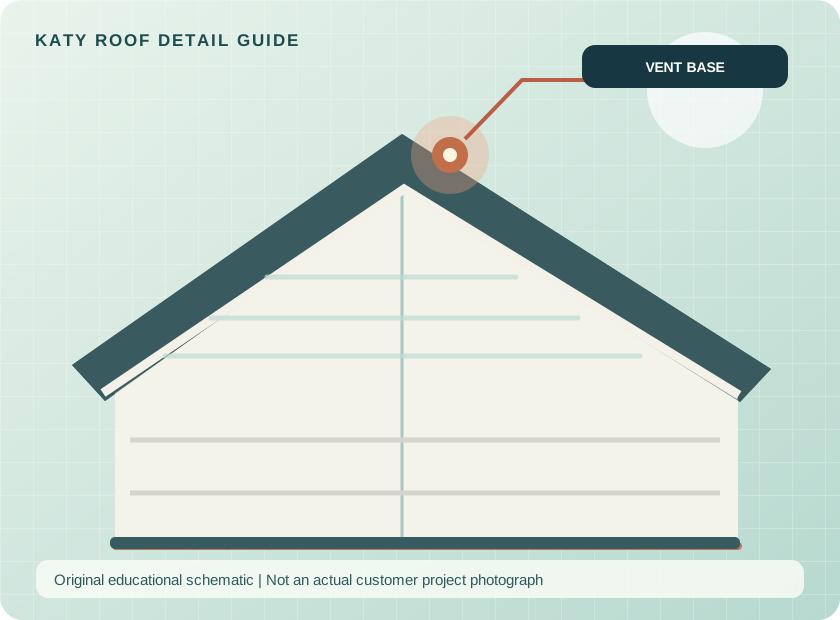
Look at the turbine body, the metal base where it crosses the shingles, and nearby attic decking.
A spinning vent is both a ventilation part and a roof opening. The repair needs to protect the roof without blocking the airflow it was made to provide.
Is the water coming through the turbine head, around the flange, or from indoor humidity?
For a broader explanation of the roof system, visit Roof Vent Leak Repair. This guide focuses on the smaller part that may need special attention.
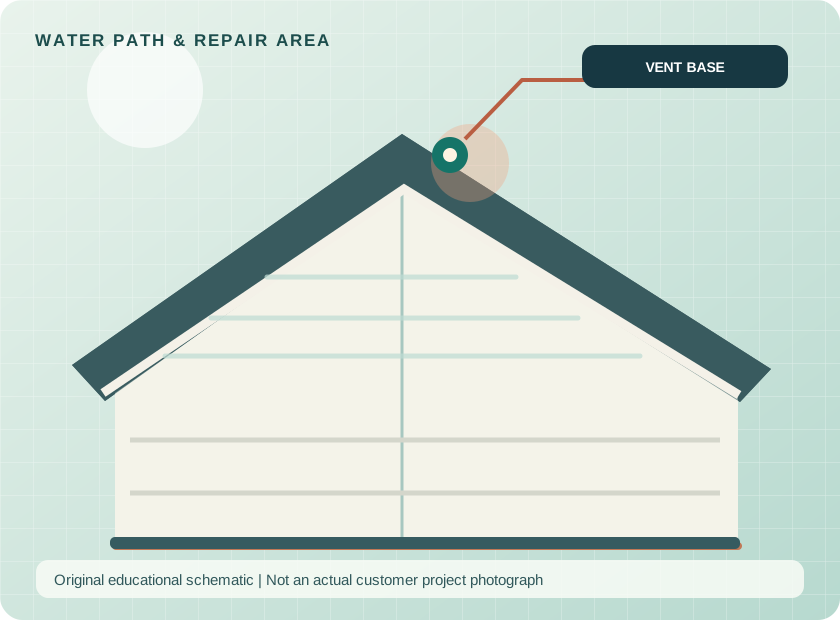
These clues help describe what happened. They do not prove a diagnosis, because roof water can travel before you see it inside.
Water shows near the vent opening after wind-driven rain.
A damaged moving part may no longer sit or turn as designed.
A corroded seam can become an entry point.
Repeated surface patches may cover a damaged base or poor shingle overlap.
Keep away from sagging ceilings and water near electrical fittings. Do not climb a wet or storm-damaged roof. Review emergency roof repair or ask about same-day availability; 24-hour coverage is not verified.
A helpful repair begins by ruling out nearby causes, not by treating the first spot that looks wet.
Check visible damage without assuming any noise means a leak.
The metal flange and shingle laps must lead water downhill.
Condensation and roof water can look similar near a vent.
Vent replacement should suit the home’s airflow design.
A spinning vent is both a ventilation part and a roof opening. The repair needs to protect the roof without blocking the airflow it was made to provide. Ask the contractor to explain the path water took and how the work will interrupt that path.
A final plan depends on the real roof materials, safe access, and whether hidden sections stayed dry.
Address sound metal flashing and affected shingles when possible.
A bent, corroded, or failing turbine may need a correctly sized replacement.
If condensation causes dripping, roof patching alone may not solve it.
The estimate should name the affected component and explain how hidden damage, product matching, access, or a larger section would be approved before extra work begins. If the problem is not limited to this detail, start with roof leak repair.
These are questions and checkpoints to expect from a qualified roofing professional—not a claim that a visit has already been arranged.
Strong storms can push rain toward vent openings in Katy. A vent should be assessed for both damage and fit. For nearby addresses in Cinco Ranch, Fulshear, Brookshire, or Cypress, confirm the actual work area and appointment availability before scheduling.
Searching for roof turbine vent leak repair near me? When contacting a provider, share your ZIP code and ask whether they have experience with this exact roof detail.
These are general answers. Only a property-specific inspection can confirm the cause, access needs, and safe scope of work.
For more background, explore the roof leak learning center and roofing material guides.
A damaged cap or flashing may admit rain whether it spins or not. The moving parts and base both need review.
Not always. Its location and depth matter, but significant corrosion can weaken a seam.
Yes. Attic humidity can leave moisture near vents. A roofer should assess the pattern before calling it rainwater.
A sound installation must integrate its base with the surrounding roofing so water drains outward.
Some roof issues overlap. These links help you compare related components without sending every problem to the same generic page.
Tell us where the water shows, which roof detail concerns you, and whether the leak is active. Ask whether a qualified visit is available for your Katy-area address. No response time, free inspection, or guarantee is promised without verification.