A tab sits higher than its neighbors
The shingle edge may lift or chatter in windy weather.
A shingle tab may still be on the roof after wind loosens its seal. That does not always mean it is keeping out rain.
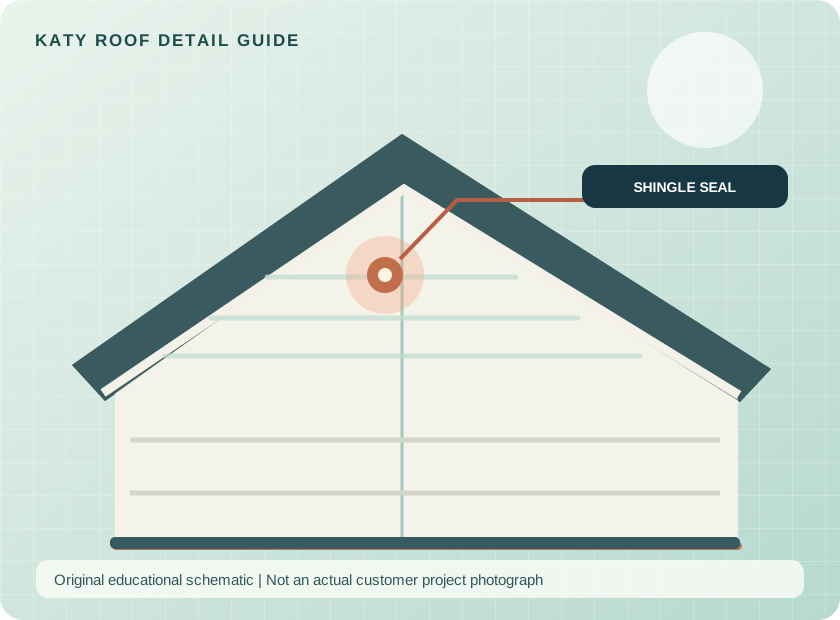
Check broad shingle fields and roof edges where uplift and sun exposure work on adhesive seal strips.
A shingle that looks flat on a sunny day may have lost its bond. Wind and water can exploit the loosened edge during the next storm.
Are the tabs merely unsealed, or has wind creased the material so replacement is the better option?
For a broader explanation of the roof system, visit Wind Damage Roof Repair. This guide focuses on the smaller part that may need special attention.
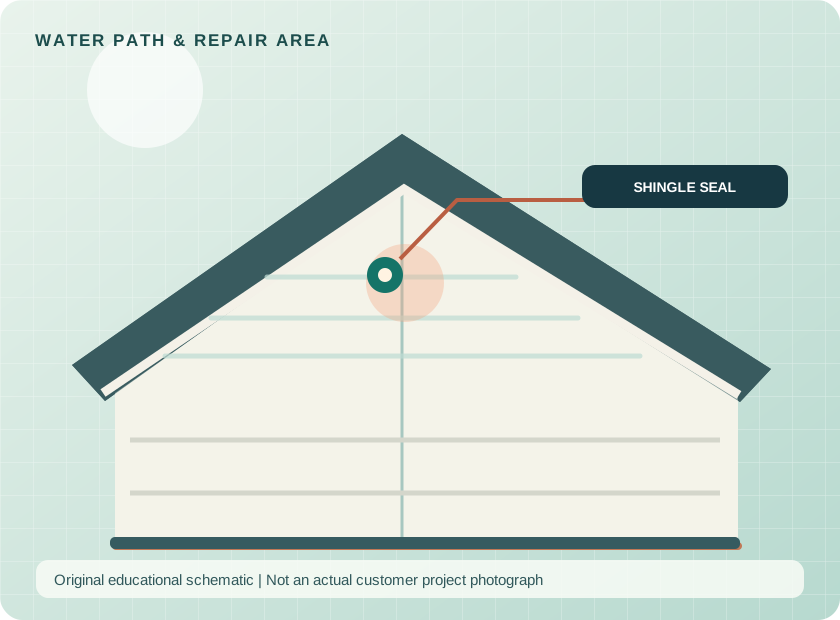
These clues help describe what happened. They do not prove a diagnosis, because roof water can travel before you see it inside.
The shingle edge may lift or chatter in windy weather.
More than one tab can lose adhesion along the same roof plane.
Rain may be driven under a tab that lies flat during calm weather.
Once a lifted shingle bends sharply, it may be damaged rather than just unsealed.
Keep away from sagging ceilings and water near electrical fittings. Do not climb a wet or storm-damaged roof. Review emergency roof repair or ask about same-day availability; 24-hour coverage is not verified.
A helpful repair begins by ruling out nearby causes, not by treating the first spot that looks wet.
Brittle, creased, cracked, and missing tabs require different decisions.
Poor fastening or dirt at a seal line can keep tabs from bonding.
One failure may be part of a larger wind-damage pattern.
The repair method must work with the actual shingle model and condition.
A shingle that looks flat on a sunny day may have lost its bond. Wind and water can exploit the loosened edge during the next storm. Ask the contractor to explain the path water took and how the work will interrupt that path.
A final plan depends on the real roof materials, safe access, and whether hidden sections stayed dry.
For some systems a contractor can restore the correct seal using approved methods.
A bent or torn tab may not be safe to reuse.
Multiple lifted rows can signal a larger roof issue, not a spot repair.
The estimate should name the affected component and explain how hidden damage, product matching, access, or a larger section would be approved before extra work begins. If the problem is not limited to this detail, start with roof leak repair.
These are questions and checkpoints to expect from a qualified roofing professional—not a claim that a visit has already been arranged.
Katy wind and heat can place extra stress on seal strips, particularly at exposed roof edges. For nearby addresses in Cinco Ranch, Fulshear, Brookshire, or Cypress, confirm the actual work area and appointment availability before scheduling.
Searching for lifted shingle seal repair near me? When contacting a provider, share your ZIP code and ask whether they have experience with this exact roof detail.
These are general answers. Only a property-specific inspection can confirm the cause, access needs, and safe scope of work.
For more background, explore the roof leak learning center and roofing material guides.
No. A lifted tab may still be present but can let water underneath during wind-driven rain.
Sometimes, if it remains flexible and the manufacturer-approved method fits. Brittle or creased pieces may need replacement.
Wind changes how water moves. A loose tab may stay dry in still rain but leak when gusts push water uphill.
Coverage depends on your policy and the cause. A roofer can document damage, but the insurer decides on claims.
Some roof issues overlap. These links help you compare related components without sending every problem to the same generic page.
Tell us where the water shows, which roof detail concerns you, and whether the leak is active. Ask whether a qualified visit is available for your Katy-area address. No response time, free inspection, or guarantee is promised without verification.