01
Start with the water path
A Westlake Royal tile roof can shed rain while its underlayment or a metal valley detail still needs repair. That is why a ceiling stain and a roof opening are not always in the same place.
A Westlake Royal tile roof can shed rain while its underlayment or a metal valley detail still needs repair. If you are looking for Westlake Royal Roofing Solutions roof leak repair near me, start by finding the water entry point, checking the exact roof product, and asking what repair options fit your home or building.
Westlake Royal provides several roof product families including Newpoint concrete tile and U.S. Tile clay tile systems. Tile shape, batten layout, underlayment, and roof flashings all affect leak control.
For a home in Katy, the key is not simply having a famous name on the roof. The roof must have sound joints, dry decking, working flashings, and enough drainage for sudden Texas rain. A product label helps identify the materials; it does not replace an inspection.
Our roof inspection guide explains the difference between an overall roof check and tracing a specific leak. You can also review roof leak repair options when the entry point is known.
Look beneath displaced tiles at the underlayment and flashing near valleys and walls. A cracked tile is important, but an intact tile can still cover a failed waterproofing layer.
A Westlake Royal tile roof can shed rain while its underlayment or a metal valley detail still needs repair. That is why a ceiling stain and a roof opening are not always in the same place.
Check for cracked or slid tiles, exposed underlayment, debris-clogged valleys, and gaps around ridges. An inspector should also check the safe attic access and the deck below the suspected area.
Distinguish concrete, clay, and composite systems, then note the tile profile and local availability. Material identification helps avoid patches that do not fit or sit unevenly.
Replacing a tile without checking the layer below can hide the reason water reached the roof deck. Where water is actively entering, ask about available temporary protection and keep clear of electrical hazards.
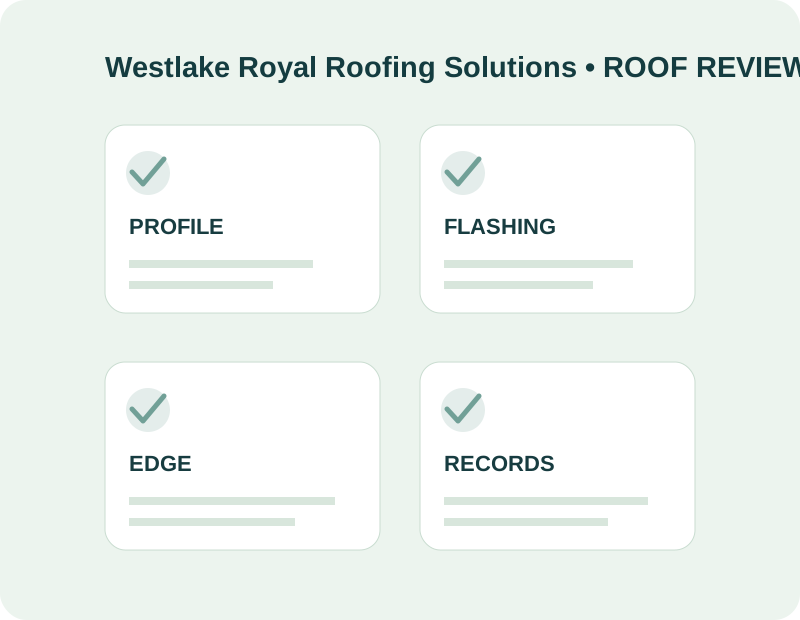
An original checklist illustration: product profile, joint, water path, and repair records.
Confirm the material: Westlake Royal roofing includes multiple tile lines and materials. Determine whether the roof uses concrete or clay tile, then identify the shape, size, and color blend.
Trace the likely entry point: Look beneath displaced tiles at the underlayment and flashing near valleys and walls. A cracked tile is important, but an intact tile can still cover a failed waterproofing layer.
Choose a compatible next step: Ask how tiles will be removed and replaced without breakage and whether matching accessory tiles are available for the affected detail.
Tile roofs have more than one protective layer. The visible tile moves most of the rain away, while the underlayment and flashing help protect the deck. That is why a repair may involve a tile, a piece of metal flashing, the underlayment, or more than one of these parts. Correct tile fit matters when putting the roof back together.
What to match: Distinguish concrete, clay, and composite systems, then note the tile profile and local availability.
What to avoid: Replacing a tile without checking the layer below can hide the reason water reached the roof deck.
For issues around walls or metal joints, learn about roof flashing repair. The work should fit the installed roof, not follow a one-size-fits-all patch method.
Westlake Royal-specific answers should begin with the installed product and the roof detail that actually failed. Ask how tiles will be removed and replaced without breakage and whether matching accessory tiles are available for the affected detail.
Not by itself. A stain or a loose piece is a clue, not a full diagnosis. For Westlake Royal Roofing Solutions, check the roof assembly, flashings, and the place water can travel inside before deciding what must be replaced.
Possibly, but the exact concrete, clay, composite, and specialty roof assemblies must be identified. Small repairs can work when nearby material is sound, compatible parts are available, and the roof was installed correctly.
Start with photos from a safe location, the installation record, and the manufacturer product name. Do not walk on the roof. A qualified inspection can compare those clues with the roof system.
The written terms for your installed product control the answer. Material, weather resistance, and installation coverage vary by product and assembly. Manufacturer literature should guide claims. Ask the manufacturer or original installer before assuming a small repair is covered.
Ask for a leak-source assessment that looks beyond surface damage. Check for cracked or slid tiles, exposed underlayment, debris-clogged valleys, and gaps around ridges. Contact the roofing team to confirm that a specialist for this material can be scheduled.
Explain where and when you saw water, then share what you know about your Westlake Royal system. Ask how tiles will be removed and replaced without breakage and whether matching accessory tiles are available for the affected detail. Ask whether this roof type is within the available service scope.
Before you contact us
Keep safe photos and product records handy. A short description of the problem is enough to begin.