Worn rubber around screw heads
The washer may be split, brittle, or no longer seated properly.
Exposed-fastener metal roofs rely on screws and sealing washers to keep rain out. A cracked washer or backed-out screw can become a tiny but persistent leak path.
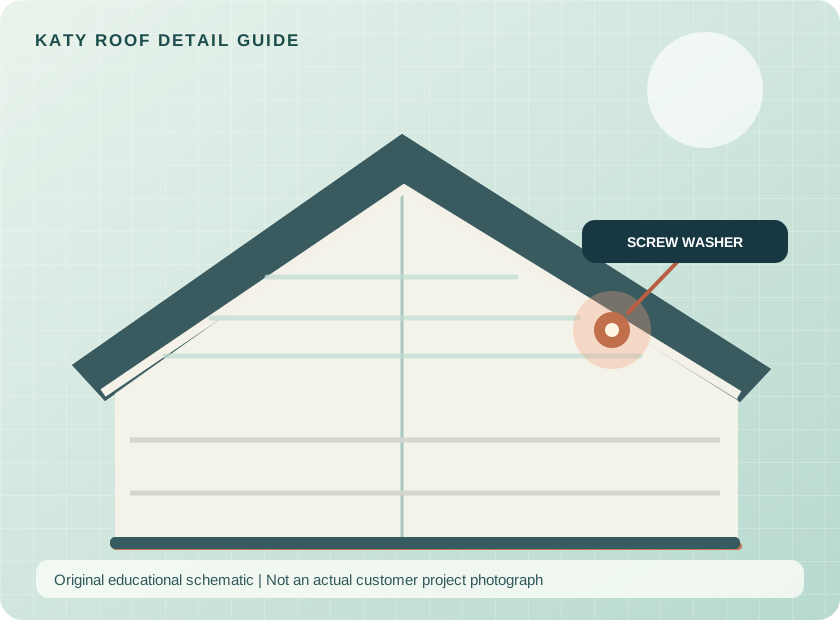
This applies mainly to exposed-fastener panels often found on shops, sheds, carports, and some buildings—not every standing-seam roof.
A new washer cannot seal a worn, oversized hole or a loose support. The screw, hole, and panel must work together.
Are the washers failing by age, or are the screws loose because the fastening surface has changed?
For a broader explanation of the roof system, visit Metal Roof Leak Repair. This guide focuses on the smaller part that may need special attention.
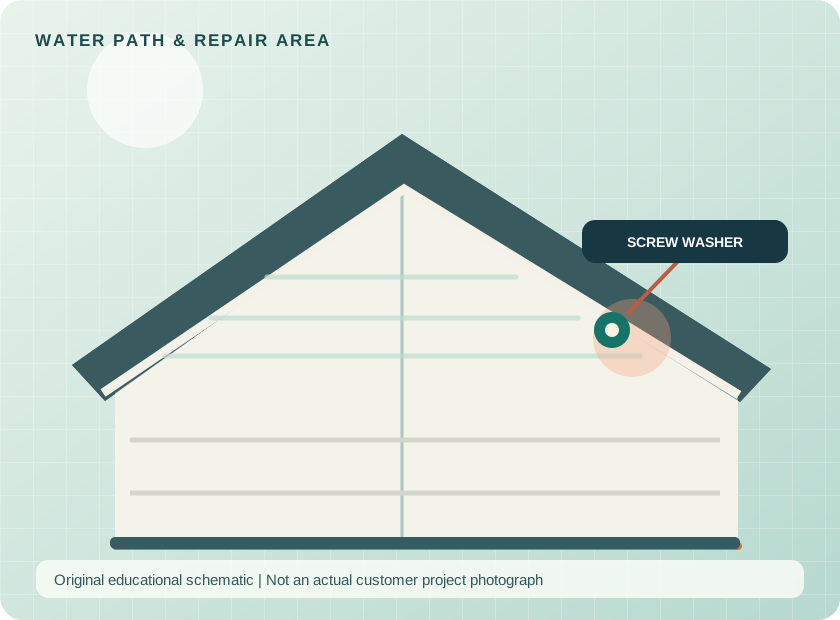
These clues help describe what happened. They do not prove a diagnosis, because roof water can travel before you see it inside.
The washer may be split, brittle, or no longer seated properly.
Movement can break the seal between fastener and panel.
Repeated moisture may appear around one screw line.
A whole field of older washers may be reaching similar wear.
Keep away from sagging ceilings and water near electrical fittings. Do not climb a wet or storm-damaged roof. Review emergency roof repair or ask about same-day availability; 24-hour coverage is not verified.
A helpful repair begins by ruling out nearby causes, not by treating the first spot that looks wet.
Replacement parts must match the actual roof and substrate.
One failed washer differs from widespread aging across a roof.
An enlarged hole or soft support may not hold a new screw as intended.
Water at a screw line can also come from panel seams or trim uphill.
A new washer cannot seal a worn, oversized hole or a loose support. The screw, hole, and panel must work together. Ask the contractor to explain the path water took and how the work will interrupt that path.
A final plan depends on the real roof materials, safe access, and whether hidden sections stayed dry.
Where holes and supports are sound, compatible replacements may solve an isolated issue.
Repair may require specialist fastener sizing or substrate correction.
A pattern of old washers may justify a larger maintenance scope.
The estimate should name the affected component and explain how hidden damage, product matching, access, or a larger section would be approved before extra work begins. If the problem is not limited to this detail, start with roof leak repair.
These are questions and checkpoints to expect from a qualified roofing professional—not a claim that a visit has already been arranged.
Heat, storms, and age can harden sealing washers on Katy-area exposed-fastener roofs. For nearby addresses in Cinco Ranch, Fulshear, Brookshire, or Cypress, confirm the actual work area and appointment availability before scheduling.
Searching for metal roof fastener gasket replacement near me? When contacting a provider, share your ZIP code and ask whether they have experience with this exact roof detail.
These are general answers. Only a property-specific inspection can confirm the cause, access needs, and safe scope of work.
For more background, explore the roof leak learning center and roofing material guides.
No. Some use concealed fasteners. This page is for roofs with visible fastening points.
Yes. It can admit water, though the path should be checked before work begins.
Not automatically. The number, age, and condition of failed fasteners should guide the plan.
An oversized hole or weak substrate may prevent a tight, lasting connection.
Some roof issues overlap. These links help you compare related components without sending every problem to the same generic page.
Tell us where the water shows, which roof detail concerns you, and whether the leak is active. Ask whether a qualified visit is available for your Katy-area address. No response time, free inspection, or guarantee is promised without verification.