Puddling or debris uphill of chimney
Leaves stay trapped behind masonry after the rest of the roof looks dry.
Water that runs toward the uphill side of a wide chimney can collect behind it. A cricket is a small raised roof shape that sends this water around the chimney.
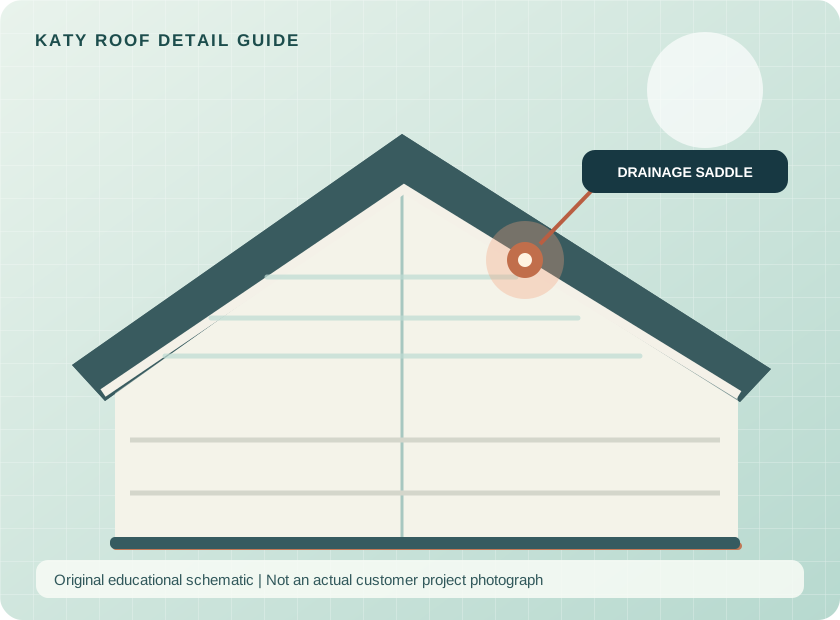
The area to examine sits uphill of a large masonry chimney where roof runoff reaches a dead end.
The purpose of a cricket is to divide water before it reaches a chimney wall. Patching the wall alone does not fix trapped runoff.
Is the leak caused by a failed metal joint, or does the chimney area need a better path for runoff?
For a broader explanation of the roof system, visit Chimney Flashing Repair. This guide focuses on the smaller part that may need special attention.
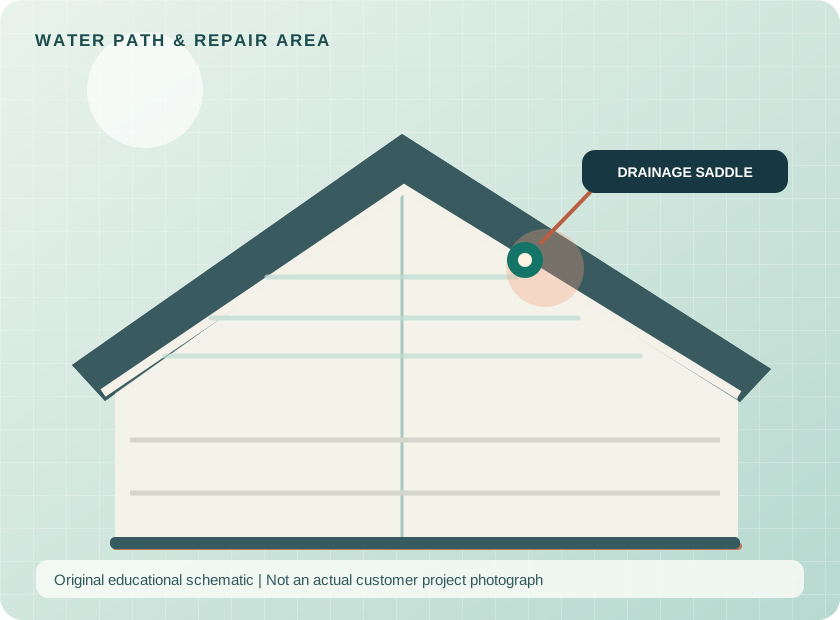
These clues help describe what happened. They do not prove a diagnosis, because roof water can travel before you see it inside.
Leaves stay trapped behind masonry after the rest of the roof looks dry.
Water marks appear on an upper wall beside the chimney chase.
Old patching may hide a shape or flashing problem.
Slow water buildup can test a joint more than a short shower.
Keep away from sagging ceilings and water near electrical fittings. Do not climb a wet or storm-damaged roof. Review emergency roof repair or ask about same-day availability; 24-hour coverage is not verified.
A helpful repair begins by ruling out nearby causes, not by treating the first spot that looks wet.
Study the roof slope and whether water can flow freely around the chimney.
Metal, shingles, and underlayment over the cricket must shed water in the right direction.
A poorly joined metal back pan can undo the benefit of the raised cricket.
The area behind a chimney may hold water out of sight.
The purpose of a cricket is to divide water before it reaches a chimney wall. Patching the wall alone does not fix trapped runoff. Ask the contractor to explain the path water took and how the work will interrupt that path.
A final plan depends on the real roof materials, safe access, and whether hidden sections stayed dry.
Restore worn or split coverings on a sound diverter.
Rework metal joints so diverted water does not slip behind the masonry.
Where the shape is missing or poorly built, a larger design correction may be needed.
The estimate should name the affected component and explain how hidden damage, product matching, access, or a larger section would be approved before extra work begins. If the problem is not limited to this detail, start with roof leak repair.
These are questions and checkpoints to expect from a qualified roofing professional—not a claim that a visit has already been arranged.
Heavy Houston-area rain makes blocked uphill chimney pockets especially important to inspect. For nearby addresses in Cinco Ranch, Fulshear, Brookshire, or Cypress, confirm the actual work area and appointment availability before scheduling.
Searching for chimney cricket leak repair near me? When contacting a provider, share your ZIP code and ask whether they have experience with this exact roof detail.
These are general answers. Only a property-specific inspection can confirm the cause, access needs, and safe scope of work.
For more background, explore the roof leak learning center and roofing material guides.
No. Need depends on chimney size, roof geometry, and applicable building requirements. An assessment can explain the design.
Some roofers call it a saddle. Both mean a small sloped diverter uphill of a chimney.
Yes. Cracked mortar or a chimney crown may also admit water. Roof and masonry causes should be separated.
Debris holds moisture and can block water flow. It is a reason to have the area checked safely.
Some roof issues overlap. These links help you compare related components without sending every problem to the same generic page.
Tell us where the water shows, which roof detail concerns you, and whether the leak is active. Ask whether a qualified visit is available for your Katy-area address. No response time, free inspection, or guarantee is promised without verification.