A stain beside an exterior wall
Water shows up near the ceiling-to-wall joint after a hard rain, even though the middle of the roof looks fine.
A wet line along an upstairs wall may begin where sloped shingles meet siding. Each metal step must direct water onto the next shingle—not behind the wall.
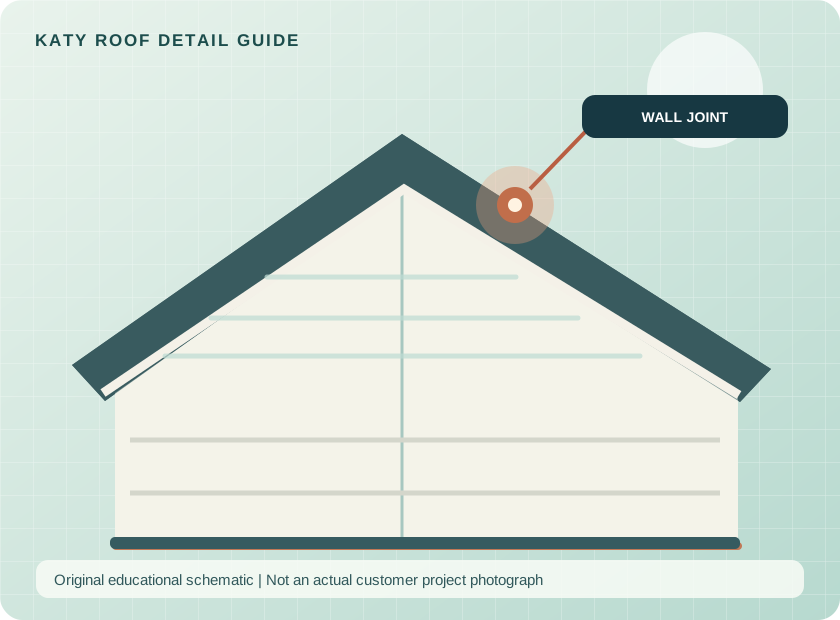
This problem often appears beside second-story walls, roof additions, and places where a lower roof meets a taller section of a home.
Step flashing is a series of small overlapping parts. Treating the entire run as a single strip can let water cross the joint instead of flowing back onto the roof.
Is the water entering behind the siding, beneath the shingle edge, or through the roof covering itself?
For a broader explanation of the roof system, visit Roof Flashing Repair. This guide focuses on the smaller part that may need special attention.
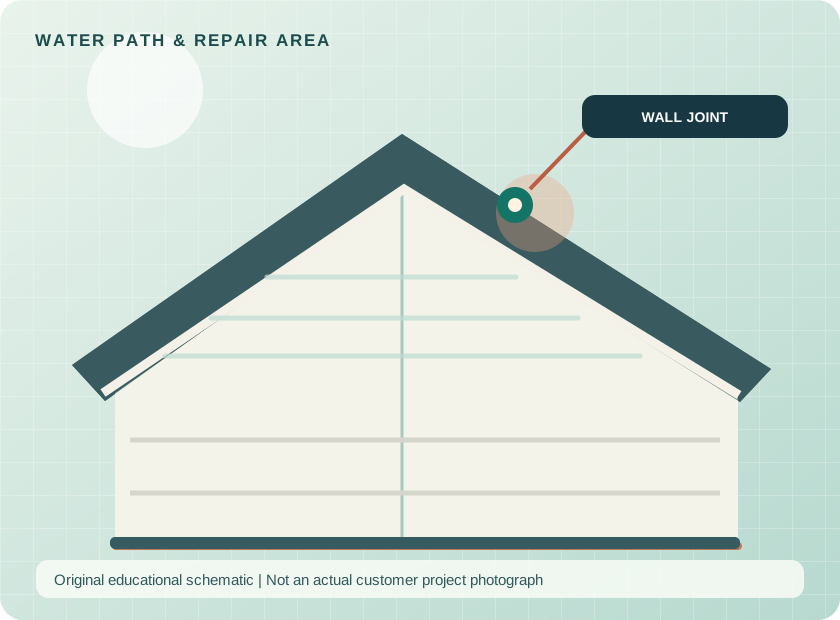
These clues help describe what happened. They do not prove a diagnosis, because roof water can travel before you see it inside.
Water shows up near the ceiling-to-wall joint after a hard rain, even though the middle of the roof looks fine.
The cladding or trim near the roof slope looks open, stained, or swollen.
A heavy line of sealant may be hiding metal that never overlapped correctly.
Rain blown into a wall connection can show a gap that ordinary rainfall misses.
Keep away from sagging ceilings and water near electrical fittings. Do not climb a wet or storm-damaged roof. Review emergency roof repair or ask about same-day availability; 24-hour coverage is not verified.
A helpful repair begins by ruling out nearby causes, not by treating the first spot that looks wet.
Compare inside water marks with the outside roof-to-wall line and the path that runoff takes.
Look for missing, reversed, bent, or short pieces of step flashing beneath the shingles.
Note whether siding is too close to the roof or has trapped damp debris against the flashing.
Damage next to the joint can make a new bead of caulk look helpful when it does not solve the cause.
Step flashing is a series of small overlapping parts. Treating the entire run as a single strip can let water cross the joint instead of flowing back onto the roof. Ask the contractor to explain the path water took and how the work will interrupt that path.
A final plan depends on the real roof materials, safe access, and whether hidden sections stayed dry.
Where the roof and siding are sound, affected pieces can sometimes be removed and properly integrated again.
Badly corroded, short, or crushed step pieces may need new parts that fit each shingle course.
Rotten sheathing, poor siding clearance, or repeated failures may require coordinated roof-and-wall work.
The estimate should name the affected component and explain how hidden damage, product matching, access, or a larger section would be approved before extra work begins. If the problem is not limited to this detail, start with roof leak repair.
These are questions and checkpoints to expect from a qualified roofing professional—not a claim that a visit has already been arranged.
Katy storms often push rain sideways. A wall joint that stays dry during gentle rain may leak when wind presses water beneath an exposed edge. For nearby addresses in Cinco Ranch, Fulshear, Brookshire, or Cypress, confirm the actual work area and appointment availability before scheduling.
Searching for step flashing repair near me? When contacting a provider, share your ZIP code and ask whether they have experience with this exact roof detail.
These are general answers. Only a property-specific inspection can confirm the cause, access needs, and safe scope of work.
For more background, explore the roof leak learning center and roofing material guides.
Yes. A single broken overlap can give moving water a route behind the roof covering. The nearby pieces should still be checked.
Sealant may serve a limited purpose in some details, but it does not replace proper metal overlap and sound surrounding materials.
Sometimes a small section needs to be opened so flashing can be fitted correctly. The inspection should make that need clear.
Ask for a check of the roof-to-wall joint and water path. Wind-driven rain can reach gaps that lighter rain does not.
Some roof issues overlap. These links help you compare related components without sending every problem to the same generic page.
Tell us where the water shows, which roof detail concerns you, and whether the leak is active. Ask whether a qualified visit is available for your Katy-area address. No response time, free inspection, or guarantee is promised without verification.