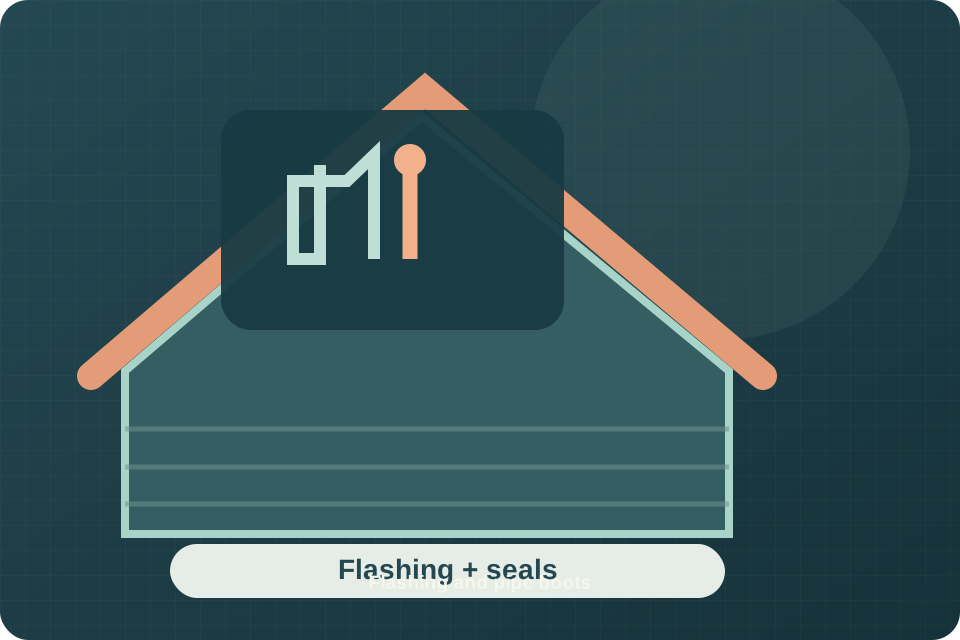
Look at the places where the roof meets a wall, chimney, or pipe. Correct part shape and installation matter more than a quick layer of caulk.
What flashing actually does
Flashing is usually a shaped strip of metal or another approved material placed where the roof changes direction or meets something else. Its job is to move water back onto the roof surface so it can drain away.
Roof-to-wall joints, chimneys, skylights, and edges may use different flashing designs. If one piece is bent, missing, or poorly overlapped, rain can slip into the joint. The right fix depends on the shape of the joint and the roof material.
Check these clues
- Roof-to-wall step flashing
- Chimney and skylight flashing
- Metal used at roof edges and transitions
A pipe boot seals a pipe opening
Plumbing vent pipes pass through the roof. A pipe boot or pipe flashing helps seal the opening around the pipe. Some boots have a rubber collar that can wear over time, especially under strong sun.
A crack in the collar may allow rain to reach the roof opening. But not every dark mark near a pipe is a leak. A roofer should check the flashing and surrounding shingles before recommending a repair.
Questions and details to note
- Cracked or split collar
- Loose boot flashing
- Damage in nearby roof material
Keep this in mind
These clues are a starting point. A photo, stain, or sound on its own does not show every part of the roof condition.
Why extra sealant may not be enough
Caulk can help with some approved details, but it is not a replacement for correct flashing. A poor overlap may direct water into the roof instead of away from it. If a repair simply covers the problem, the leak may return when the weather changes.
Ask whether the damaged piece will be repaired or replaced and how the new work will handle water running down the roof.
What matters most
- Confirm compatible materials
- Ask about proper overlap and drainage
- Avoid a repair with no explanation of the leak path
How the problem shows up indoors
A ceiling stain may appear close to a bathroom vent, but water can travel along rafters before dripping into the room. If the stain grows only during hard wind-driven rain, that timing can point toward an exposed joint.
Take a picture of the room and note when the mark grows. Tell the inspector which vents, walls, or chimney are upslope from that part of the room. You do not need to find the source yourself.
Check these clues
- Water appearing after one type of storm
- Marks under a roof penetration
- Repeat leaks after a surface-only patch
Choosing the right service
For a vent pipe opening, start by asking about pipe boot repair. For a wall or chimney joint, ask about roof flashing repair. A general roof inspection is better if you do not know where water enters.
If you know the roof manufacturer or material type, share it with the provider. Asphalt, metal, and flat-roof systems use different details. Product compatibility matters more than whether a part looks similar.
Questions and details to note
- Describe where the water appears
- Ask for photos of the damaged detail
- Request a written scope with the repair method
Sources worth checking
For material guidance or Texas consumer rules, review the original public resources:
This guide gives general information. It is not an inspection report, a repair quote, or insurance advice.