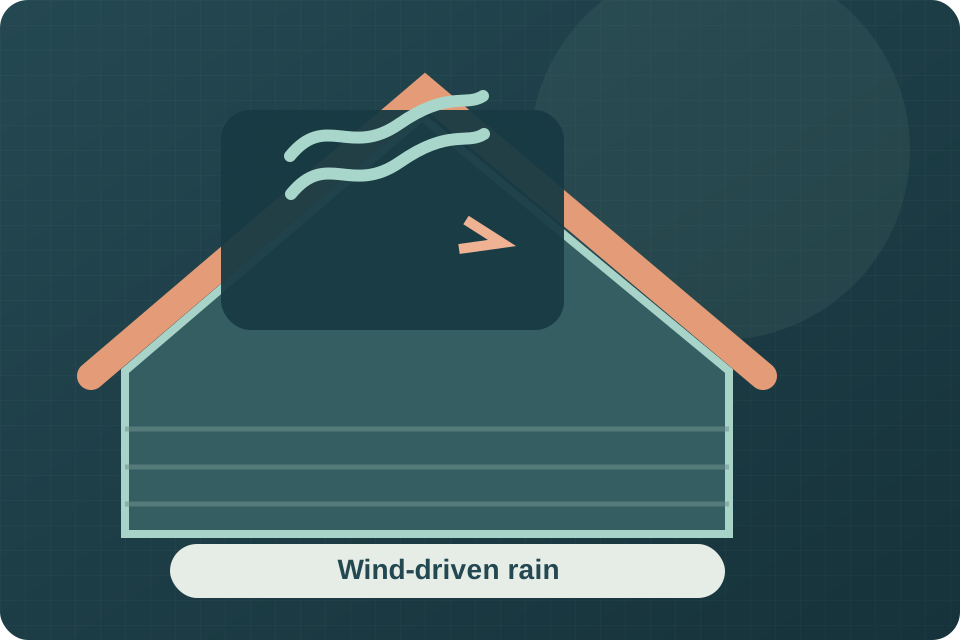
A wind-only leak often points to an exposed edge, joint, or roof opening—but the pattern is only a clue, not a final diagnosis.
Why sideways rain behaves differently
Roof systems are designed to shed water downhill. Strong wind changes the path. Rain can blow up against a wall, under a shingle edge, or into a seam. A small gap that is normally protected may face direct water during a storm.
Homes in the Katy area can see intense thunderstorms, including wind and heavy rain. The amount of rain is not the only useful detail. The direction of wind and the part of the house getting hit may be just as important.
Check these clues
- Roof-to-wall joints on the windward side
- Shingle edges that are no longer sealed
- Roof penetrations such as vents and pipes
Flashing: the small metal with a big job
Flashing is the thin material that helps steer water away from where roof parts meet. It is often found near walls, chimneys, skylights, and pipes. A loose edge or poor overlap can let wind-driven rain move past the water barrier.
Do not assume caulk alone will solve the problem. Some joints need the correct metal shape and overlap, not just more sealant. A repair plan should name the joint and explain how water will be guided out.
Questions and details to note
- Look at where the roof meets a vertical wall
- Ask if step flashing or kick-out flashing is involved
- Make sure the proposed fix handles water flow
Keep this in mind
These clues are a starting point. A photo, stain, or sound on its own does not show every part of the roof condition.
What a storm log can show
Write down the room, time of the leak, and which way the storm seemed to come from. You do not need a weather station. A short note that the west wall got hit hard can still help the inspection.
Also note if the leak came from the same spot in earlier storms. One storm may reveal damaged material; another may reveal a joint that was never sealed correctly. These are different repairs.
What matters most
- Rain was heavy but wind was light: no drip
- Rain blew into one wall: stain appeared
- Leak stopped after the wind changed: source may be exposed to that direction
How to avoid a guess-and-patch cycle
Pointing to a stained ceiling does not show the roof entry point. A careful inspection looks at roof layout, uphill openings, and signs in the attic. Ask the roofer to share photos and explain the most likely route.
If the issue only happens in unusual weather, a first visit may not prove every detail. A clear written plan is still useful. Ask what will be checked, what repair is proposed, and how you'll know the issue is resolved.
Check these clues
- Compare inside and outside locations
- Check both roof material and surrounding flashing
- Track the result during future rain
When this is more than a small leak
If wind has lifted a large section of roofing, a tree has hit the roof, or water is near electrical equipment, keep people away from the damaged area. Ask about an urgent assessment and safe temporary protection.
Never try to test a leak by spraying a damaged roof during a storm. Let a qualified professional decide which inspection method fits the roof and weather.
Questions and details to note
- Describe how the leak changes with wind
- Request an emergency response estimate only when needed
- Keep photographs for your records
Sources worth checking
For material guidance or Texas consumer rules, review the original public resources:
This guide gives general information. It is not an inspection report, a repair quote, or insurance advice.